


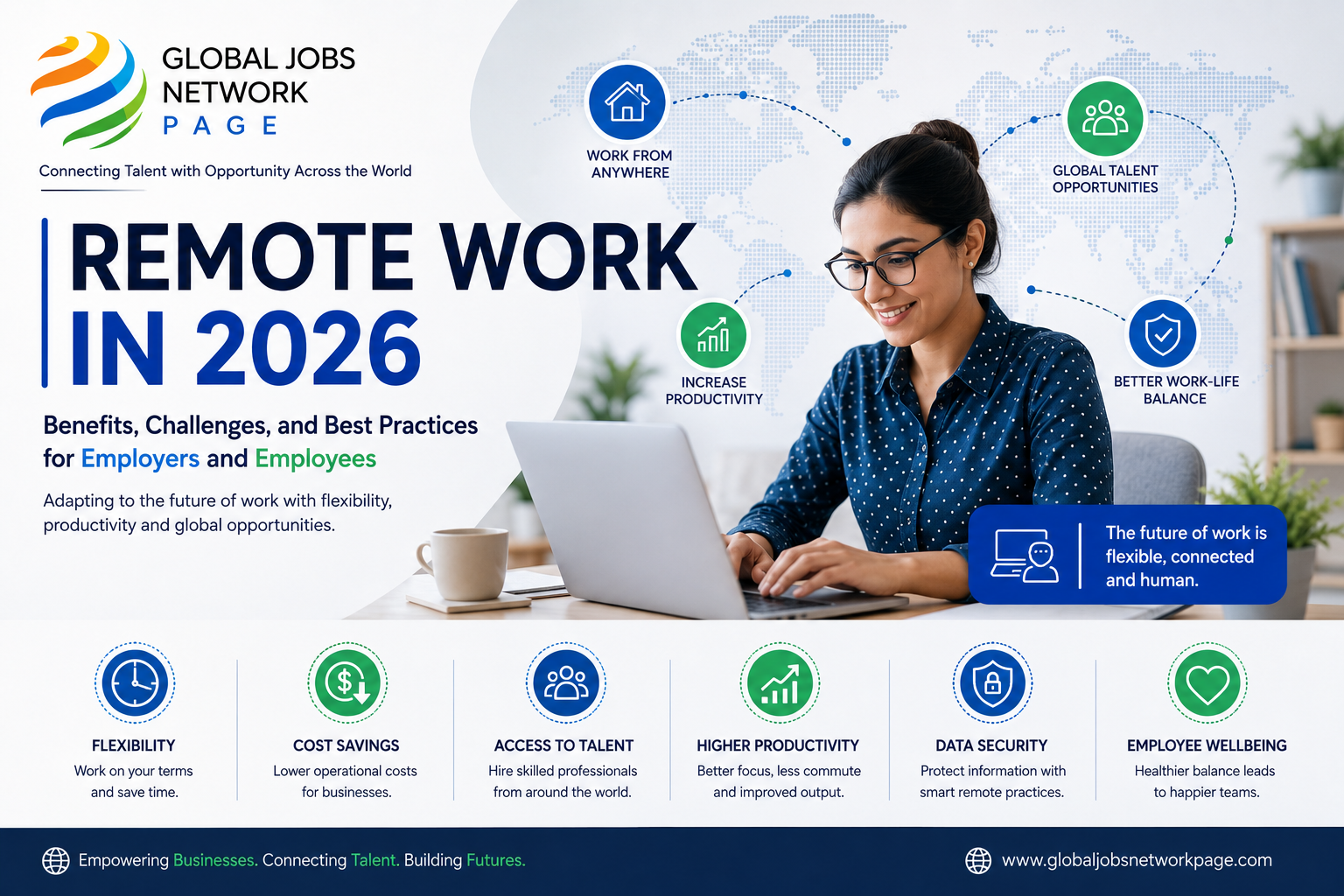
Focus Keyword: Remote Work in 2026
Remote work has evolved from a temporary solution into a long-term workforce strategy adopted by organizations across many industries. Advances in cloud technology, collaboration tools, and digital communication have made it possible for employees to work effectively from almost anywhere.
According to the World Economic Forum (WEF), digital transformation and flexible work arrangements continue to reshape the future of employment, requiring organizations and employees to develop new skills and adapt to changing workplace expectations (Source: World Economic Forum – Future of Jobs Report).
Whether you’re an employer building a distributed team or a professional considering remote opportunities, understanding the benefits, challenges, and best practices of remote work is essential.
What Is Remote Work?
Remote work allows employees to perform their job responsibilities outside a traditional office environment. Depending on the organization, employees may work:
- From home
- In co-working spaces
- While travelling
- In a hybrid arrangement combining office and remote work
Many businesses now offer flexible working arrangements to improve employee satisfaction and attract skilled professionals.
Why Remote Work Continues to Grow
Several factors have contributed to the growth of remote work, including:
- Improved internet connectivity
- Cloud-based software
- Video conferencing platforms
- Digital collaboration tools
- Global talent availability
The International Labour Organization (ILO) notes that well-managed remote work can improve flexibility and business continuity while requiring organizations to address issues such as communication, wellbeing, and occupational safety (Source: International Labour Organization – Working from Home).
Benefits of Remote Work for Employers
1. Access to a Larger Talent Pool
Remote hiring allows organizations to recruit qualified professionals regardless of their geographic location.
This enables employers to:
- Recruit specialized talent
- Fill skill shortages
- Increase workforce diversity
- Expand internationally
2. Lower Operating Costs
Organizations may reduce expenses related to:
- Office space
- Utilities
- Office supplies
- Daily operational costs
Savings can often be redirected toward employee development, technology, or business growth.
3. Improved Employee Retention
Flexible work arrangements can contribute to higher employee satisfaction.
According to the Chartered Institute of Personnel and Development (CIPD), flexible working practices can support employee wellbeing, improve work-life balance, and help organizations retain experienced employees when implemented effectively (Source: CIPD – Flexible Working Factsheet).
Benefits of Remote Work for Employees
Remote work offers professionals several advantages:
- Reduced commuting time
- Greater flexibility
- Improved work-life balance
- Access to international employment opportunities
- More control over their work environment
Employees often appreciate the opportunity to structure their workday while maintaining productivity.
Challenges of Remote Work
Although remote work offers many benefits, it also presents challenges.
Common issues include:
- Communication barriers
- Team collaboration
- Cybersecurity risks
- Employee isolation
- Performance monitoring
- Time zone differences
Organizations should develop clear remote work policies to address these challenges effectively.
Best Practices for Employers
Establish Clear Communication
Regular meetings, project updates, and transparent communication help remote teams remain aligned.
Invest in Technology
Provide employees with reliable tools for:
- Video conferencing
- File sharing
- Project management
- Team collaboration
Measure Performance by Outcomes
Rather than monitoring hours worked, many organizations evaluate employees based on goals, productivity, and results.
The Society for Human Resource Management (SHRM) encourages organizations to establish clear performance expectations and maintain regular communication with remote employees to support engagement and accountability (Source: SHRM – Remote Work Resources).
Prioritize Employee Wellbeing
Support employee wellbeing by encouraging:
- Regular breaks
- Flexible scheduling where appropriate
- Mental health awareness
- Professional development opportunities
Best Practices for Remote Employees
Professionals working remotely should:
- Create a dedicated workspace.
- Follow a consistent work schedule.
- Communicate proactively.
- Stay organized.
- Continue learning new skills.
- Protect company information.
- Maintain work-life boundaries.
Developing these habits can improve productivity and professional growth.
Technology Supporting Remote Work
Popular workplace technologies include:
- Video conferencing software
- Cloud storage platforms
- Project management tools
- Instant messaging applications
- Digital HR systems
- Collaboration software
Technology should support—not replace—effective communication and teamwork.
The Future of Remote Work
As organizations continue embracing digital transformation, remote and hybrid work are expected to remain important workforce models across many industries.
Employers that combine flexible work arrangements with strong leadership, effective communication, and appropriate technology are likely to be better positioned to attract and retain skilled professionals.
Similarly, employees who develop digital skills, adaptability, and strong communication abilities will remain competitive in the evolving global job market.
How Global Jobs Network Supports Remote Careers
At Global Jobs Network, we connect talented professionals with employers seeking skilled candidates for on-site, hybrid, and remote positions.
We also help organizations identify qualified professionals through recruitment solutions designed to support modern workforce needs.
Whether you’re searching for your next remote opportunity or hiring talent across borders, our mission is to connect the right people with the right opportunities.
Frequently Asked Questions
Is remote work suitable for every profession?
No. Suitability depends on the role, industry, employer requirements, and the nature of the work. Many knowledge-based roles can be performed remotely, while others require an on-site presence.
What skills are important for remote employees?
Communication, time management, self-discipline, digital literacy, collaboration, and problem-solving are among the skills commonly valued in remote work environments.
Can remote work improve productivity?
Research findings vary by industry and job type. Productivity depends on factors such as management practices, employee engagement, technology, and the suitability of the work for remote arrangements.
Final Thoughts
Remote work has become an important part of the modern employment landscape. While it offers flexibility and access to global opportunities, successful implementation requires thoughtful planning, effective communication, and the right technology.
Organizations that invest in strong remote work practices and employees who continue developing their digital and professional skills will be well-positioned for success in the years ahead.
At Global Jobs Network Page, we’re committed to helping employers build successful teams and supporting professionals as they navigate an increasingly connected global workforce.
References
- Society for Human Resource Management (SHRM) – https://www.shrm.org
- Chartered Institute of Personnel and Development (CIPD) – https://www.cipd.org
- World Economic Forum – Future of Jobs Report – https://www.weforum.org/reports/the-future-of-jobs-report/
- International Labour Organization (ILO) – Working from Home – https://www.ilo.org
Leave A Comment