


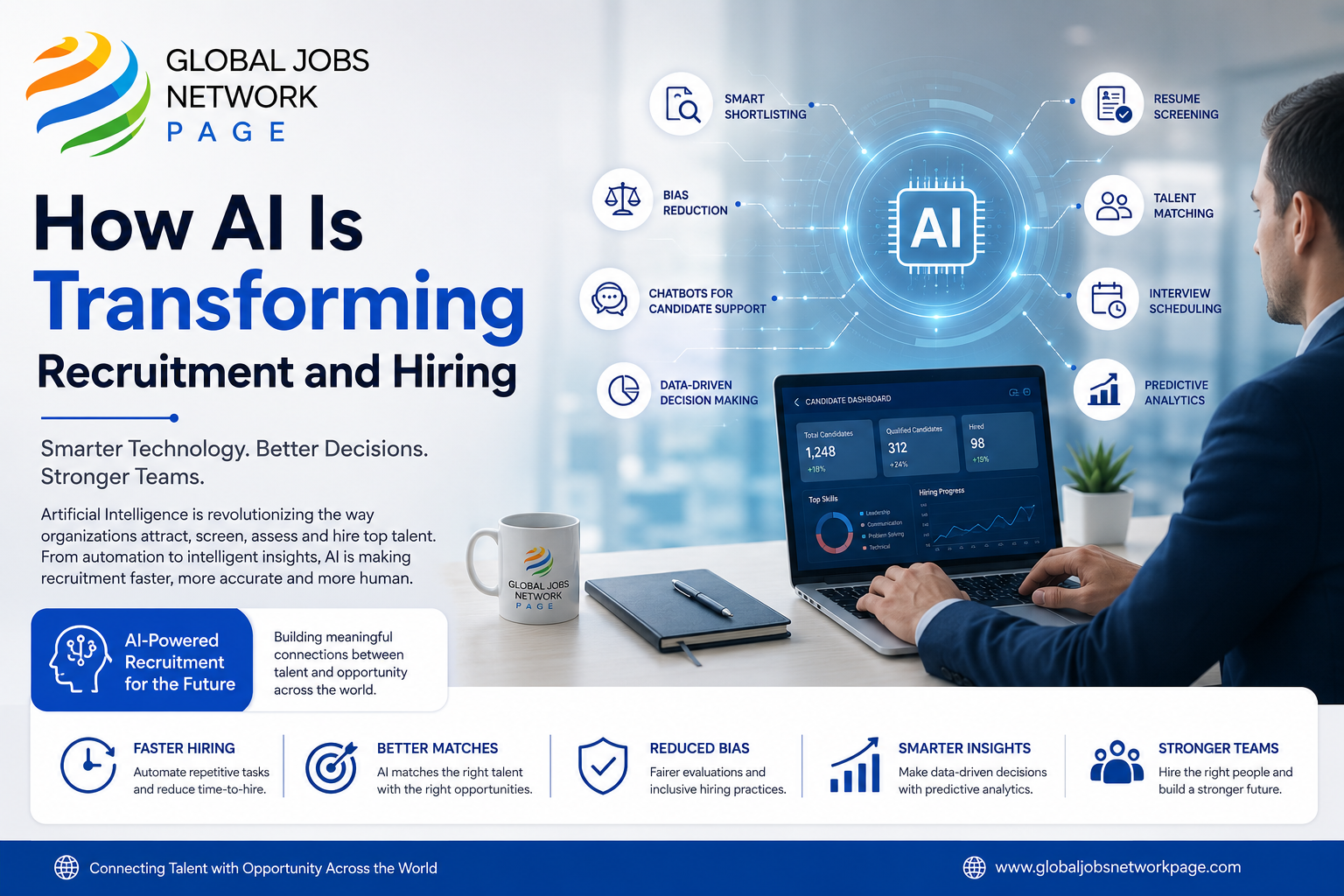
Artificial Intelligence (AI) is reshaping the recruitment industry by helping organizations hire faster, make more informed decisions, and improve the candidate experience. While AI does not replace human recruiters, it supports HR professionals by automating repetitive tasks, analyzing large volumes of data, and providing insights that help organizations identify qualified candidates more efficiently.
As businesses continue to compete for skilled talent, AI-powered recruitment has become an important part of modern hiring strategies. Organizations of all sizes are exploring AI tools to streamline recruitment while ensuring that hiring decisions remain fair, efficient, and aligned with business goals.
In this article, we’ll explore how AI is transforming recruitment, its benefits, challenges, and the best practices organizations should follow when adopting AI-driven hiring solutions.
What Is AI in Recruitment?
Artificial Intelligence in recruitment refers to the use of software and machine learning technologies to support various stages of the hiring process.
AI can assist recruiters by:
- Screening resumes
- Matching candidates with vacancies
- Scheduling interviews
- Answering candidate questions through chatbots
- Analyzing recruitment data
- Predicting hiring trends
- Improving recruitment efficiency
Rather than replacing HR professionals, AI enables recruiters to spend more time on relationship-building, interviewing, and strategic decision-making.
Why AI Is Becoming Essential in Recruitment
Recruiters often receive hundreds—or even thousands—of applications for a single vacancy. Reviewing every application manually can be time-consuming.
AI helps organizations:
- Reduce administrative workload.
- Process applications more quickly.
- Improve hiring efficiency.
- Enhance the candidate experience.
- Support data-informed hiring decisions.
This allows HR teams to focus on identifying the best talent instead of spending excessive time on manual screening.
1. Faster Resume Screening
One of AI’s most common applications is resume screening.
AI-powered recruitment systems can compare resumes against job requirements and identify candidates whose qualifications closely match the position.
Potential benefits include:
- Faster application review.
- Consistent evaluation criteria.
- Reduced manual workload.
- Improved recruiter productivity.
However, human review remains important to ensure context and individual strengths are properly considered.
2. Smarter Candidate Matching
Modern recruitment platforms use AI to compare candidate profiles with job requirements.
Instead of relying solely on job titles, AI can analyze:
- Skills
- Experience
- Certifications
- Education
- Keywords
- Career progression
This helps recruiters identify candidates who may be suitable even if their career paths are non-traditional.
3. AI Chatbots Improve Candidate Experience
Many organizations now use AI-powered chatbots to answer common recruitment questions.
Candidates can receive instant information about:
- Application status
- Interview schedules
- Job descriptions
- Company policies
- Recruitment timelines
This improves communication while allowing recruiters to focus on more complex interactions.
4. Automated Interview Scheduling
Coordinating interviews between candidates and hiring managers can be time-consuming.
AI scheduling tools can:
- Check calendar availability.
- Suggest interview times.
- Send invitations.
- Issue reminders.
- Reduce scheduling conflicts.
This creates a smoother recruitment experience for everyone involved.
5. Recruitment Analytics
AI enables HR teams to analyze recruitment performance using data.
Common recruitment metrics include:
- Time-to-Hire
- Cost-per-Hire
- Source of Hire
- Offer Acceptance Rate
- Recruitment Funnel Conversion
- Candidate Satisfaction
These insights help organizations continuously improve their hiring processes.
6. Skills-Based Hiring
Many organizations are shifting toward skills-based recruitment.
AI can help identify candidates based on demonstrated competencies rather than relying only on degrees or job titles.
This approach can:
- Expand the available talent pool.
- Improve workforce diversity.
- Identify transferable skills.
- Support more objective hiring decisions.
7. Supporting Diversity and Inclusion
AI has the potential to support fairer recruitment when designed and monitored responsibly.
Organizations should regularly review AI tools to ensure they:
- Use relevant job-related criteria.
- Avoid unintended bias.
- Support inclusive hiring practices.
- Complement—not replace—human judgment.
Responsible governance is essential because AI systems can also reflect biases present in historical training data if they are not properly evaluated.
Challenges of AI in Recruitment
Although AI offers significant advantages, employers should also consider its limitations.
Challenges include:
- Data privacy considerations.
- Potential algorithmic bias.
- Over-reliance on automation.
- Limited understanding of interpersonal qualities.
- Need for human oversight.
Successful recruitment combines AI efficiency with human expertise.
Best Practices for Using AI in Hiring
Organizations adopting AI should consider the following practices:
Define Clear Hiring Criteria
Use AI to assess skills and qualifications that are directly relevant to the role.
Maintain Human Oversight
Recruiters should review AI recommendations before making hiring decisions.
Protect Candidate Data
Handle applicant information responsibly and in accordance with applicable privacy laws.
Monitor Recruitment Outcomes
Regularly evaluate whether AI tools improve hiring quality, efficiency, and fairness.
Be Transparent
Inform candidates when AI is used as part of the recruitment process and explain how it supports the hiring workflow.
How Global Jobs Network Page Supports Modern Recruitment
At Global Jobs Network Page, we believe technology should strengthen—not replace—the human side of recruitment.
Our recruitment approach combines professional expertise with modern hiring practices to help employers:
- Identify qualified candidates.
- Reduce recruitment time.
- Improve candidate quality.
- Support strategic workforce planning.
- Build high-performing teams.
By embracing innovation while maintaining a people-first approach, we help connect organizations with talented professionals across multiple industries.
Frequently Asked Questions
Will AI replace recruiters?
No. AI is designed to support recruiters by automating repetitive tasks and providing insights. Human judgment remains essential for interviews, relationship building, cultural assessment, and final hiring decisions.
Can AI improve recruitment efficiency?
Yes. AI can help reduce administrative work, accelerate resume screening, automate scheduling, and provide useful recruitment analytics.
Is AI recruitment suitable for small businesses?
Many AI-powered recruitment tools are available for businesses of different sizes. Small organizations should evaluate solutions based on their hiring needs, budget, and data privacy requirements.
What skills are important in AI-assisted recruitment?
Recruiters benefit from understanding recruitment technology, data analysis, structured interviewing, communication, ethical hiring practices, and employment law.
Final Thoughts
Artificial Intelligence is changing the way organizations attract and hire talent. When used responsibly, AI can improve recruitment efficiency, enhance the candidate experience, and provide valuable insights that support better hiring decisions.
However, successful recruitment will always depend on people. Technology can analyze data, but recruiters and hiring managers bring the empathy, judgment, and strategic thinking needed to build strong teams.
At Global Jobs Network Page, we combine modern recruitment practices with a human-centered approach to help employers find the right talent and help professionals discover meaningful career opportunities. As recruitment continues to evolve, organizations that balance technology with human expertise will be better positioned for long-term success.
References
This article was prepared using guidance and information from the following organizations:
- Society for Human Resource Management (SHRM) – https://www.shrm.org
- Chartered Institute of Personnel and Development (CIPD) – https://www.cipd.org
- World Economic Forum – Future of Jobs Report – https://www.weforum.org/reports/the-future-of-jobs-report/
- LinkedIn Talent Solutions – https://business.linkedin.com/talent-solutions
- International Labour Organization (ILO) – https://www.ilo.org
Leave A Comment